





Steel Umbrella Frame vs Carbon Fiber Frame: Durability Comparison
 Aug 12, 2026|
When choosing a durable umbrella, the frame material can make a major difference in weight, flexibility, corrosion resistance, and long-term performance. The two options often compared are a traditional and a modern carbon fiber umbrella frame.
Steel is valued for its rigidity, established manufacturing process, and lower cost. Carbon fiber, meanwhile, offers an excellent strength-to-weight balance and strong corrosion resistance. But which frame is actually more durable? The answer depends not only on the material, but also on frame design, joints, ribs, canopy construction, and manufacturing quality.
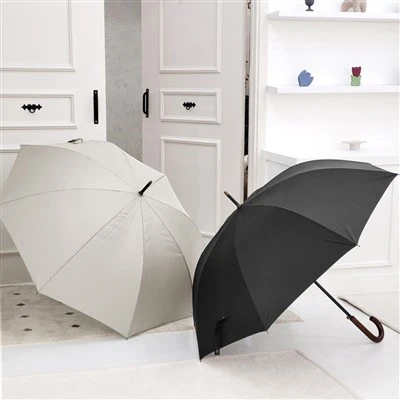
Steel vs Carbon Fiber Umbrella Frames: What Is the Difference?
Why Are Steel Umbrella Frames Durable?
Steel has been used in umbrella frames for decades because it provides good rigidity and structural stability at a relatively low cost. A well-made steel frame can withstand repeated opening, closing, and normal outdoor use.
Its main disadvantage is weight. Steel is considerably heavier than carbon fiber, which can make a large or frequently carried umbrella less convenient. Steel can also be affected by corrosion when exposed to moisture over time. ISO 9224 provides guidance on corrosion attack for metals and alloys exposed to outdoor atmospheres, highlighting why environmental exposure matters when evaluating metal durability.
Why Choose a Carbon Fiber Umbrella Frame?
Carbon fiber composites are attractive for premium umbrellas because they can provide high mechanical performance at low weight. A U.S. Department of Energy research report, for example, describes carbon fiber composites as attractive partly because of their high strength-to-weight ratio.
For umbrella manufacturers, this makes carbon fiber particularly useful for lightweight travel umbrellas, premium umbrellas, and wind-resistant designs.
Steel Umbrella Frame vs Carbon Fiber Frame: Durability Comparison
| Factor | Steel Frame | Carbon Fiber Frame |
|---|---|---|
| Rigidity | Excellent | Excellent |
| Weight | Heavy | Very light |
| Corrosion resistance | Moderate | Excellent |
| Flexibility | Moderate | Good |
| Cost | Lower | Higher |
| Premium positioning | Moderate | High |
| Design potential | Good | Excellent |
The important point is that carbon fiber is not automatically more durable than steel in every situation. Carbon fiber performance depends heavily on fiber orientation, composite construction, connection points, and the design of the complete frame.
For an umbrella, the durability of a joint or rib connection can be just as important as the material itself.


Which Frame Is Better for Strong Wind?
Many buyers assume that a stronger material automatically creates a more wind-resistant umbrella. In reality, wind resistance is a system-level characteristic.
A durable wind-resistant umbrella should consider:
Rib geometry
Joint strength
Shaft construction
Canopy tension
Frame flexibility
Connection quality
A steel frame may resist deformation well under normal loads, but excessive force can permanently bend the metal. A properly engineered carbon fiber frame can offer controlled flexibility while keeping the structure lightweight.
Buyer Insight: Never choose an umbrella simply because it is advertised as "carbon fiber" or "windproof." Ask the supplier how the frame has been tested and how the ribs and joints are reinforced.
Which Frame Performs Better in Rain and Humid Conditions?
This is another area where carbon fiber has an advantage.
Steel can corrode when its protective surface is damaged or when it is repeatedly exposed to moisture. Research on steel durability also shows that corrosion can reduce structural performance over time.
Carbon fiber itself does not rust like steel, making it attractive for umbrellas used frequently in humid climates, rainy regions, and coastal environments.
However, buyers should still evaluate the complete frame, because metal components such as screws, joints, or springs may require their own corrosion protection.
Which Umbrella Frame Should Different Buyers Choose?
Choose steel if you prioritize:
Lower manufacturing cost
Traditional construction
High rigidity
Large-volume, price-sensitive products
Choose carbon fiber if you prioritize:
Lightweight performance
Premium positioning
Corrosion resistance
Travel-friendly design
Advanced frame technology
For a budget promotional umbrella, steel can remain a practical option. For a premium carbon fiber umbrella, lightweight travel umbrella, or high-end business gift, carbon fiber can provide stronger product differentiation.
How to Choose a Truly Durable Umbrella Frame
Material should be only the starting point. Before purchasing, buyers should ask about:
Frame and rib material
Joint construction
Shaft strength
Corrosion protection
Canopy fabric
Wind testing
Quality inspection
Manufacturer experience
The key principle is simple: Material + Design + Manufacturing Quality = Real-World Durability.
A poorly manufactured carbon fiber umbrella can perform worse than a well-engineered steel umbrella.
Why Choose HeSanJiang for Carbon Fiber Travel Umbrellas?
For brands, wholesalers, and distributors, choosing the right manufacturing partner is as important as choosing the right frame material.
Huizhou HeSanJiang Umbrella Co., Ltd. has more than 20 years of umbrella manufacturing experience and operates a 5,000+ square meter production workshop. The company provides OEM and ODM services covering product development, sampling, customization, production, quality inspection, and shipment.


Final Verdict: Steel or Carbon Fiber?
For overall lightweight performance, corrosion resistance, and premium positioning, carbon fiber has a clear advantage. Steel remains highly practical where low cost, rigidity, and established manufacturing processes are the priorities.
For both materials, however, durability ultimately depends on more than the frame itself. Rib geometry, joints, shaft construction, canopy design, quality control, and manufacturing expertise all influence how an umbrella performs in real-world conditions.
For brands and wholesalers, the best approach is to choose the frame material according to the product's target market rather than simply choosing the material with the strongest marketing claim.
FAQ
Q: Is carbon fiber stronger than steel for umbrellas?
A: Not in every sense. Carbon fiber can offer an excellent strength-to-weight ratio, but steel can provide high rigidity and good impact tolerance. Umbrella performance depends on the complete frame design.
Q: Are carbon fiber umbrellas better in strong wind?
A: They can be, particularly when the frame is engineered for controlled flexibility and reinforced at critical joints. However, carbon fiber alone does not make an umbrella windproof.
Q: Do steel umbrella frames rust?
A: They can. Moisture and environmental exposure can cause corrosion, although coatings and other protective treatments can significantly improve corrosion resistance.
Q: Are carbon fiber umbrellas worth the higher price?
A: For premium, lightweight, travel, and high-performance products, the higher material cost can be justified. For highly price-sensitive umbrellas, steel may provide better cost efficiency.
Q: Which frame is better for wholesale buyers?
A: The answer depends on positioning. Steel is generally suitable for cost-focused mass-market products, while carbon fiber is more suitable for premium umbrellas where lightweight performance and differentiation are important.
References
U.S. Department of Energy, "Low Cost Carbon Fiber Composites for Lightweight Vehicle Parts"
ISO 9224:2012, Corrosion of Metals and Alloys